Weeks 1–2
Cryptography and secret codes
Creates: Their own cipher, with instructions clear enough for someone else to use it.
Online academy in Russian · Ages 8–13
ML Academy is a live online program that connects mathematics and literature through real problems, games, books, and projects. Every module ends with something the child created and can explain.
Thursday — Literature Lab · Saturday — Math Lab
7:00–8:15 PM ET / 4:00–5:15 PM PT
Curriculum
Each topic runs across two consecutive sessions: first children learn a new way of thinking and a real tool, then they apply it to a harder challenge and create a result of their own.
Math Lab
Math, logic, science, and engineering
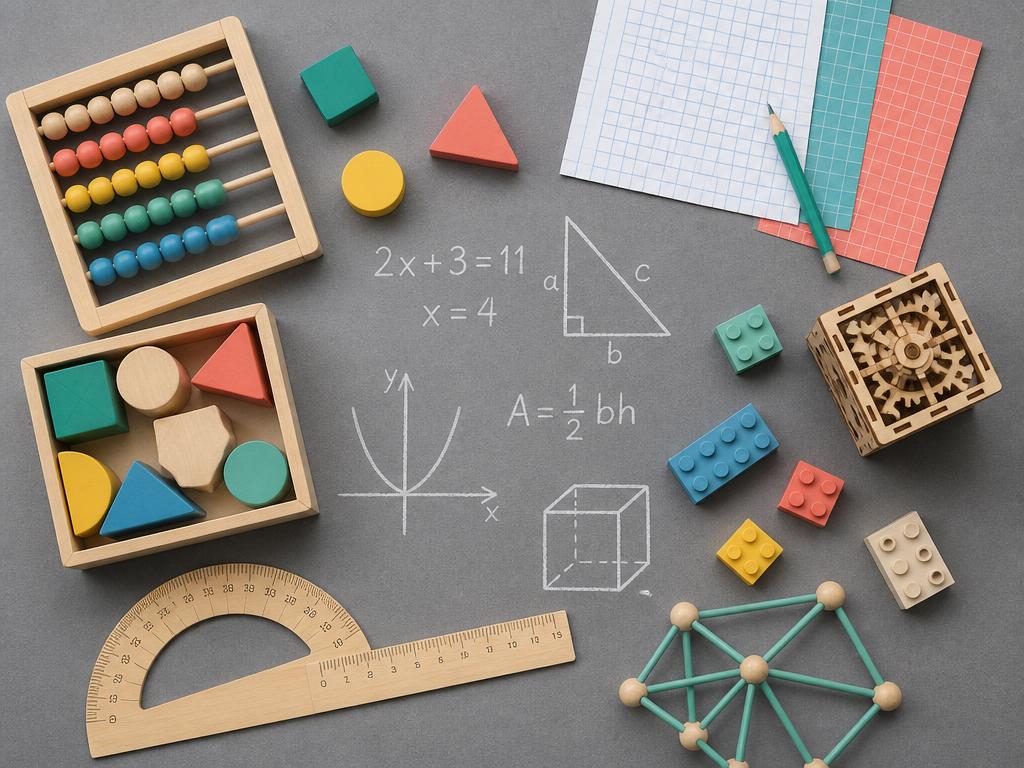
Math makes sense when you can act on it. Children decode messages, load-test structures, explore probability, map routes, and prove strategies. The rule appears while the problem is being solved, not before it.
Starts: Saturday, October 3, 2026
Weeks 1–2
Creates: Their own cipher, with instructions clear enough for someone else to use it.
Weeks 3–4
Creates: A structure that survives a load test — plus an explanation of why it held or failed.
Weeks 5–6
Creates: A working card trick that guesses a number, and a counting system of their own.
Weeks 7–8
Creates: A password-strength calculator and their own experiment with chance.
Weeks 9–10
Creates: A graph of their own neighborhood and a shortest route they can verify in practice.
Weeks 11–12
Creates: A two-player game of their own, with a winning strategy they explain and test.
The order of topics may be adjusted. Each module is complete on its own, while the full program steadily raises the difficulty of both the tasks and the thinking.
How it works
We do not replace learning with a set of entertaining exercises. The mentor breaks a hard topic into clear stages and hands the child a real tool: a cipher, a map, a construction set, a model, a literary text, or a system of proof. The child learns the method, tests it, and creates their own result.
A new field and one big question to open it.
A real method, game, text, or model — used properly.
Solve, build, compare, get it wrong, and improve it.
Finish a project or a solution that is genuinely theirs.
Present the result to the group and answer questions.
Not a grade — a result: an object, a text, a model, or a solution the child can show and explain.
Cohorts
Ages 8–10
More visual examples, clear stages, hands-on work, and close mentor support. Children learn to shape an idea, carry a small project through to a result, and talk about it with confidence.
Ages 11–13
Tighter constraints, independent choice of strategy, source checking, argument, and defending a solution. Students explain not only what they made, but why their approach works.
The big topics stay the same across both groups; the depth of the tasks, the pace, and the level of independence match the age of the cohort.
Schedule
Thursday
Starts Thursday, October 1, 2026
Saturday
Starts Saturday, October 3, 2026
The end date will be published once holidays and skipped weeks are confirmed.
Pricing
Start with a $30 trial class. If your child continues, you receive a $100 Enrollment Credit toward the 12-week program, valid for 48 hours after the trial.
Trial class
$30
one class
One full class with the group and the mentor, in your child's age cohort and chosen direction. Paid separately from tuition.
12-week program
$569
one direction · 12 classes
Six two-week modules in one lab, each ending with a completed project the child can explain.
After the Enrollment Credit
$469
$569 − $100 credit
Families who continue after the trial apply the Enrollment Credit within 48 hours and pay this amount for the 12-week program.
$30 trial class · $100 Enrollment Credit if you continue
The Enrollment Credit stays available for 48 hours after the trial class, so you have time to talk it over at home. Enroll My Child
Payment is secure. After paying, fill in the enrollment form so we can place your child in the right group.
Materials
For some modules the family orders a game, a book, or a practical kit in advance. We do not sell materials and take no markup: they stay with the child and keep working after the topic ends. Parents receive the exact list and links ahead of time.

It is a continuation of the game rather than ordinary homework: clear a few levels, finish a map, test a model, check a theory, or record a short explanation. Usually 20–60 minutes a week, and always optional.
Mentors
Every cohort has one lead mentor who knows the children, tracks their progress, and connects the modules into a single program. Guest specialists join individual topics: engineers, researchers, writers, and other practitioners.

Founder & program director
Washington, DC
Technology entrepreneur, product leader, and educator with 15+ years building products across education, real estate, and travel. Professor at SKEMA Business School and founder of The Bloomwards, where he designs career-discovery and university-strategy programs for teenagers.
Program design · Project mentoring · Presentation skills
thebloomwards.com
Math & science mentor
Seattle, WA
Product and innovation executive with 15+ years of international experience in data platforms and AI, a former international consultant with the UN Development Programme, and a teacher of mathematics and science. He turns abstract math into experiments, models, and problems children can argue about.
Mathematical reasoning · Logic · Modeling & engineering
LinkedIn
Literature & early-learning mentor
Washington, DC
Founder and director of Seeds Nature Preschool, with 14+ years in child-centered, project-based education. She builds the reading, discussion, and writing side of the program so children learn to think out loud and put ideas into clear Russian.
Reading comprehension · Discussion · Writing in Russian
LinkedInIndustry expert
United States
A practicing specialist—engineer, researcher, writer, or entrepreneur—who joins select modules to show how the skills children are learning work in real careers and projects.
Real-world applications · Career context · Hands-on workshops
Learn moreFull cohort assignments are published once the group team is confirmed.
Enrollment
Tell us a little about your child. We will confirm the right age cohort, the schedule, and the materials list, and invite you to a short introductory call.
This is an enrollment application, not a payment. We only collect what we need: no last name, birth date, school name, or home address.
Contact: coach@bloomwards.co
FAQ
Both labs are taught entirely in Russian. Children read, discuss, form hypotheses, solve problems, and present their results in Russian.
ML Academy · Math & Literature
Live sessions, real problems, practical tools, and finished results your child can explain in Russian.